
What is the best gravel for a driveway in South Carolina?
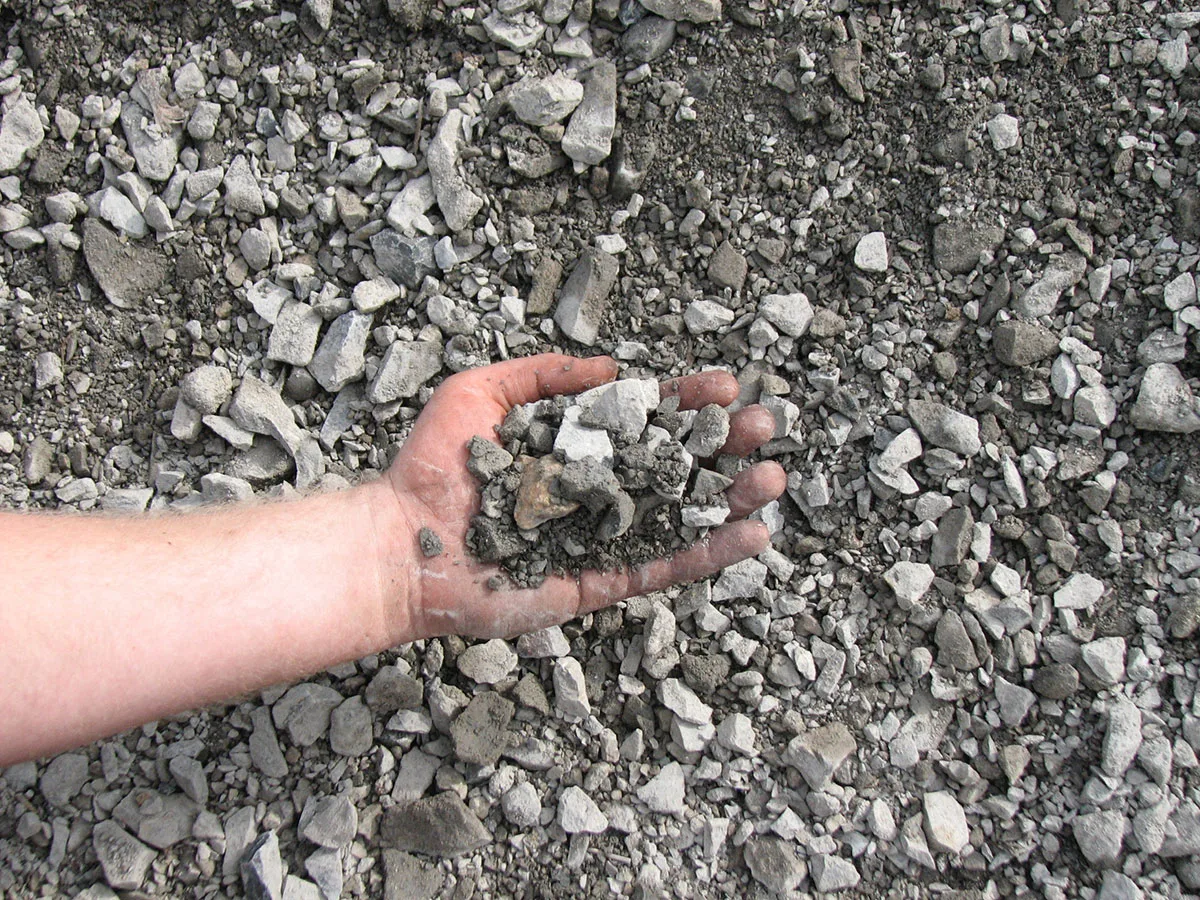
Around Florence, crusher run makes the best compacted base for most drives. Also sold as crush and run, it has stone fines that help it pack into a dense base. The top layer depends on what you want. A crusher run top packs hard, and a clean 57 stone top stays loose and drains.
The order the stone goes down in matters as much as the stone. When we build and repair gravel driveways, a packed base goes down first. The top gets picked for how the drive is used.
What is crusher run, and why does it pack so tight?
Crusher run is crushed stone mixed with stone fines, and the fines make it pack. Palmetto Sand and Gravel, an Upstate aggregate yard, calls it crushed granite aggregate blended with stone fines for compaction. The fines fill the spaces between larger pieces and help the material compact into a dense aggregate base.
The same stone goes by several names. Palmetto lists crusher run, ABC, crush and run and road bond as common names for it. ABC is short for aggregate base course. Exact naming may vary by supplier or region, so ask what is in the pile.
Palmetto says crusher run is designed for compaction. Its listed uses start with driveway bases, roadways, parking areas, shed pads and equipment pads.
What is 57 stone, and where does it work?
57 stone is clean, washed, angular stone with little to no fines. It does not compact into a dense base the way crusher run does.
Palmetto says the open gaps between the stones let water through more freely than a base with fines. It adds that 57 stone generally remains loose and free-draining after placement. Palmetto lists it as a finished driveway surface or a top layer over a compacted aggregate base.
Because it stays loose, 57 stone works best as a top course over a packed base, not as the whole drive.
411 stone sits between the two. Fixr describes it as small stone bits and coarse rock dust, with 57 stone mixed in. It makes a solid surface for heavy traffic. Fixr says 411 should be used as a top layer only, because its drainage is not ideal.
| Stone | What it is | Fines | Drainage | How it packs | Best layer |
|---|---|---|---|---|---|
| Crusher run (crush and run, ABC) | Crushed granite blended with stone fines | Yes, they fill the gaps | Built for compaction, not drainage | Packs into a dense, stable base | Base |
| 57 stone | Clean, washed, angular granite | Little to none | Water moves through the open gaps | Does not compact, stays loose | Top layer over a packed base |
| 411 stone | Small stone bits and rock dust with 57 stone mixed in | Yes, rock dust | Not ideal | Solid surface for heavy traffic | Top layer only |
Sources: Palmetto Sand and Gravel product pages (crusher run, 57 stone) and Fixr’s gravel driveway guide (411 stone).
Which layer goes where in a new gravel drive?
The packed base goes on the bottom. The top layer is picked for the surface or drainage you want. Fixr’s gravel driveway guide says a drive should ideally measure 12 inches deep. That is 3 layers of material, each 4 inches deep.
Fixr’s example build puts 57 stone over a base stone, with a top of your choice above it. Palmetto adds that required depth varies with soil conditions and traffic loads. A short drive on firm ground needs less than a long lane for a loaded trailer. We check the ground before we set a depth.
Each layer gets packed before the next one goes on. Our track loader spreads and shapes each layer of stone as the drive builds up.
For the top, you have a choice. Palmetto says crusher run makes a stable driving surface that compacts well and resists movement. A top of 57 stone stays loose and drains.
Why does the stone choice matter more on Pee Dee sand?
Pee Dee ground is flat coastal plain made of sand and clay. Rain will not run off by itself, so the drive must shed it. The stone has to hold that shape.
SCDOT’s geology chapter says land southeast of the Fall Line slopes gently, just 2 to 3 feet per mile. Rivers such as the Pee Dee cut through coastal plain sediments. SCDOT lists those as unconsolidated sand and clay, among others.
Shedding water is the job of the crown, a center higher than the sides. Fixr says most gravel drives need to be crowned to drain properly. The crown starts in the dirt, with grading for crown and drainage before any stone goes down. Crusher run compacts and resists movement, which is what a crowned base needs.
Fabric is the other piece. It goes between the prepared dirt and the first layer of stone. Bovees, a gravel driveway guide, says traffic otherwise forces fine soil up into the stone base. Engineers call this pumping or fines intrusion.
Bovees rates clay soils as the primary concern and sandy ground as lower risk. It says fabric also helps stabilize soft, saturated soils. Coastal plain ground mixes sand with clay, so soft or wet spots are where fabric earns its place.
Where does driveway stone come from around Florence?
Crushed granite comes from hard rock, and the Pee Dee sits on sediment. SCDOT’s geology chapter calls the Fall Line the boundary between bedrock uplands and coastal plain sediment. Granite does lie deep under the coastal plain. SCDOT calls it basement rock, like the Piedmont’s, with sand and clay deposited over it.
The SC Encyclopedia says coastal plain sediments overlie the hard, crystalline rocks of the Piedmont. The mining it names for the upper coastal plain is sand and clay. Palmetto, an Upstate yard, sells both crusher run and 57 stone as granite products.
Closer to home, Vulcan Materials runs an aggregates facility called Rains Yard in Mullins, in Marion County. Fixr notes that delivery costs more the further you live from the stone yard.
Delivered stone here runs higher per ton than at an Upstate yard. Our gravel driveway cost guide has current prices. We size up what your drive has to carry before any stone gets ordered.
Do you need a permit for a new driveway in South Carolina?
If the drive meets a road SCDOT maintains, yes. You need an SCDOT encroachment permit before any work in the state right of way.
SCDOT describes the permit as permission to perform work within SCDOT maintained rights of way. There are no fees associated with it. SCDOT’s Access and Roadside Management Standards say a permit must come before any work on its right of way.
Those standards cover residential driveways put in by the property owner or a contractor. The approved permit serves as the notice to proceed. SCDOT strongly encourages a preliminary meeting with its county or district staff.
SCDOT’s permit covers roads the state maintains. On a county or town road, ask that office what it requires.
Questions people ask
Is crusher run or 57 stone better for a driveway?
Crusher run is better for the base, because its stone fines help it compact into a dense, stable layer. 57 stone is clean and drains well, but it does not compact and stays loose. It works best as a top layer over a packed base. You can use both, with crusher run below and 57 on top.
How deep should a gravel driveway be?
Fixr’s gravel driveway guide puts the ideal at 12 inches of stone, in three layers 4 inches deep. Palmetto Sand and Gravel says the right depth varies with soil conditions and traffic loads. A short drive on firm ground needs less than a long lane over soft sand, so we check first.
Can you put 57 stone on top of crusher run?
Yes. Palmetto Sand and Gravel says 57 stone is commonly used as a top layer over a compacted aggregate base. Some of its customers choose to top crusher run with 57 stone. The crusher run packs into a firm base, and the 57 on top stays loose and drains.
Is crush and run the same as crusher run?
Yes. Palmetto Sand and Gravel says crusher run, crush and run, ABC and road bond are common names for one material. It is compactable aggregate base, and ABC is short for aggregate base course. Exact naming may vary by supplier or region, so ask the yard what is in the pile.
Do you need a permit for a new driveway in SC?
If the drive meets a road SCDOT maintains, yes. You need an SCDOT encroachment permit before any work in the state right of way, and SCDOT charges no fee for it. For a driveway onto a county or town road, ask that county or town office what it requires.
Want help picking the stone for your drive?
Give us a call or ask for a free on-site quote. We look at the ground and what the drive has to carry. Then we build the base and the top to match. Our page on gravel driveway building and regrading shows how a job runs.