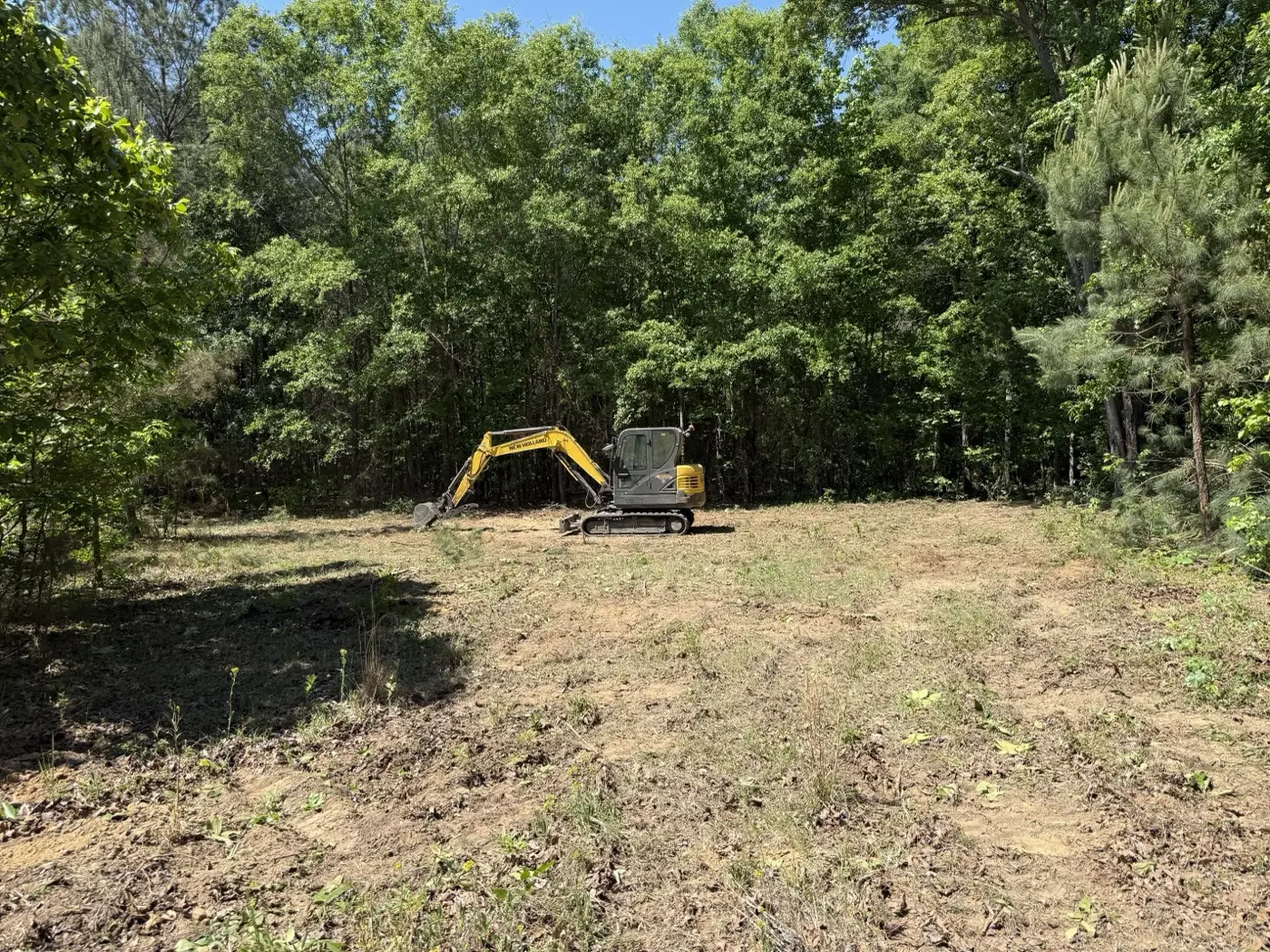
Excavation in Darlington, South Carolina is residential dirt work. That means moving ground on your property so it sits where you want it. We cut down high spots, fill low ones, and shape the surface to drain. The mini excavator does the digging and the track skid steer moves and spreads material. A dump trailer brings dirt in or carries spoil off. Most of what we dig around Darlington is sand and sandy loam. It loads easy and works well in a dry stretch. Jobs run from one low corner of a yard to a full building pad on acreage.
You can see the full scope of our excavation service and how a job gets priced. This page covers what that looks like on Darlington ground. The city sits about 11 miles northwest of Florence, a short haul for the equipment. That keeps trailer time down when dirt has to be brought in. Darlington County is flat coastal plain, and the ground rarely fights back the way clay country does. The rest of the work we take on around Darlington is listed in one place.
Tell us about the job. We will get right back to you.
Excavation on a house lot around Darlington usually starts with a problem you can see. Water stands by the back steps after every rain. A corner of the yard sits a foot lower than the rest. The ground behind a new shop slopes the wrong way. All of that is dirt in the wrong place. We dig it and put it where it belongs. Other jobs make room for something new. That could be a pad for a shop or a spot for a mobile home. Old concrete comes out with the same machine. Where a slab is left from tearing an old structure down, we dig it up and haul it off.
A job starts with stakes and a plan for where the dirt goes. Cut and fill on the same lot beats hauling, so we balance it on site when we can. The mini excavator digs and loads. The track skid steer spreads and shapes and packs it down. A dump trailer covers the rest, whether dirt has to come in or spoil has to leave. We keep the machines on one track path so the yard around the work stays whole. On sandy ground that path firms up fast once the tracks stop rolling. Rough grade goes in first, then the surface gets finished to the line you want.
Darlington County sits on the coastal plain, and the soil came out of old marine sand and clay beds. On the high ground that means sand and sandy loam. It digs fast and it drains fast. It also runs when a bank is cut too steep, so we lay slopes back. Sand moves under a track machine differently than clay, and we set the pass depth to match. Compaction matters more in sand than most people expect. A pad built on loose fill will settle under a slab. We build it in lifts and pack each one. Water is what tells the truth about a grade. We shape the surface so rain leaves the building spot.
Low ground is the other half of the picture. Swift Creek and Black Creek run through this part of the county. The bottoms along them hold water and hardwood. Lots that back up to that kind of ground stay damp longer after a storm. Heavy dirt work on soft ground makes ruts and costs you topsoil. We watch the weather and put those jobs in a dry stretch when the schedule allows. On a lot that stays wet, the fix is usually fill and shape. We bring the grade up a few inches and run the surface toward daylight. That is cheaper than chasing the problem later.
A building pad is the most common excavation job we get on acreage. The idea is simple. Strip the topsoil and roots off the footprint, then build back up with clean fill in layers. Each layer gets packed before the next one goes on. The finished pad sits a few inches above the ground around it so water sheds off the edges. Mobile home pads work the same way, sized to the frame and the tie down points. Shop pads take a little more, since a slab and a truck load put more weight on the dirt. We set the height off a fixed point instead of eyeballing it.
A pad without a way in does not do much good. Most of these jobs end with the drive dug and shaped. We cut the topsoil out of the drive line so the base sits on firm ground. Then the surface gets crowned so water runs to the sides rather than down the middle. The dirt from that cut usually goes into the pad, so nothing rides off the property. From there a gravel drive can go straight down. Finish work on the rest of the lot falls under building pads and finish grade. When stumps sit in the way, pulling stumps out happens on the same visit.
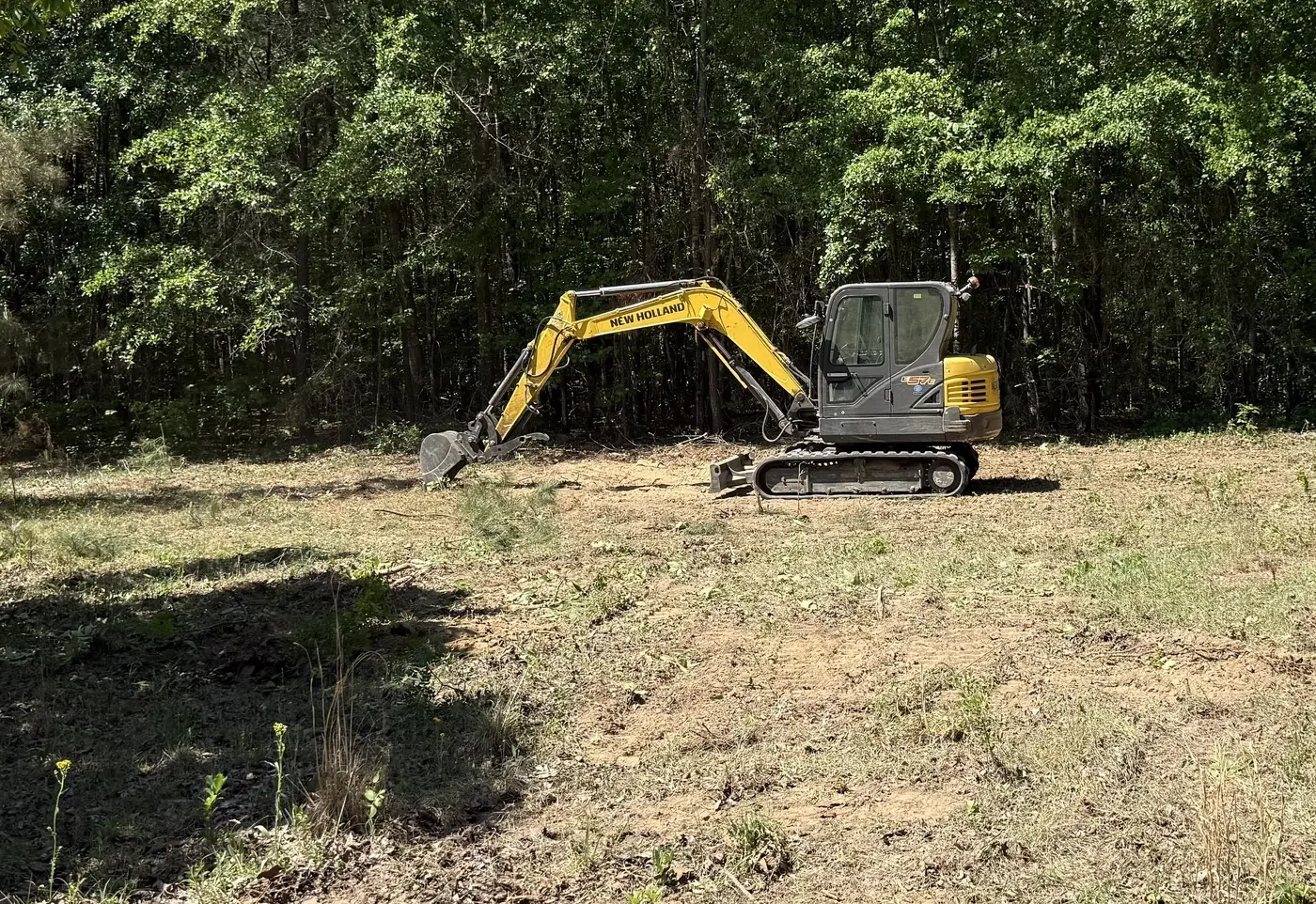
Free, no-obligation estimates throughout Darlington County.
(217) 741-6050From the first walk of the property to the last pass of the grade, here is exactly how it goes.
We come see the actual job first: the structure, the brush, the ground under it, and how equipment gets in. Demo and land work price off what is really out there.
You get a free, no-obligation quote with a real number and a real plan: what comes down or gets cleared, where the debris goes, and when. It holds unless the scope changes.
The equipment shows up when we said and the job runs the way we quoted it: teardown, clearing, digging, grading. If something unexpected turns up, you hear about it right away, not on the bill.
When the work is done we go over the property together. Debris hauled the way we agreed, grades draining the right way, the site left clean. Done means you say it is done.
What Darlington property owners ask us most about excavation. Don't see yours? Give us a call and ask.
A structure that needs to come down, an overgrown lot, stumps in the way, ground that holds water, a pad or driveway that needs building? Call or send the form. We come look at the property and hand you a free quote with a real number on it.
Tell us about the job. We will get right back to you.